Morimiyanohara Eki Koryukan
(森宮野原駅交流館)- Nearest station:
- Categories:
-
- Budget:
-
- Previous review
- View all reviews(2)
- Next review




- Previous review
- View all reviews(2)
- Next review
Restaurant information
Details
| Restaurant name |
Morimiyanohara Eki Koryukan
|
|---|---|
| Categories | Cafeteria, Japanese Cuisine, Regional Cuisine |
| Phone number (for reservation and inquiry) |
0269-87-3311 |
| Reservation availability | |
| Address |
長野県下水内郡栄村北信3585-2 JR東日本 飯山線 |
| Transportation |
5 meters from Morimiyanohara. |
| Business hours |
|
| Average price(Based on reviews) |
|

Seats/facilities
| Non-smoking/smoking |
− |
|---|
Feature - Related information
| Occasion |
|
|---|
This page has been automatically translated. Please note that some translations may be inaccurate.
Find Similar Restaurants (Area)
Morimiyanohara Sta.
- Morimiyanohara Sta.
- Morimiyanohara Sta. × Cafeteria
- Morimiyanohara Sta. × Japanese Cuisine
- Morimiyanohara Sta. × Regional Cuisine
Karuizawa
Karuizawa, Saku
- Karuizawa, Saku
- Karuizawa, Saku × Cafeteria
- Karuizawa, Saku × Japanese Cuisine
- Karuizawa, Saku × Regional Cuisine
Nagano
Sakae Village, Shimominuchi District
- Sakae Village, Shimominuchi District
- Sakae Village, Shimominuchi District × Cafeteria
- Sakae Village, Shimominuchi District × Japanese Cuisine
- Sakae Village, Shimominuchi District × Regional Cuisine
I don’t have a ‘countryside’.
To state that would be misleading and could cause a significant misunderstanding. After all, I live in Nagano Prefecture, which is known as ‘the great countryside’, and I take pride in being ‘the most rural person in Japan’. However, in this context, ‘countryside’ doesn’t refer to the opposite of urban life or an undeveloped area surrounded by mountains, but rather means ‘hometown’ or ‘the birthplace of my parents’.
Unfortunately, both my parents and I are originally from Tokyo, so when I think of ‘hometown’, it’s right in the heart of Shinjuku, which isn’t particularly interesting. My maternal grandmother is from Akita and my grandfather is from Taiwan, so there’s some semblance of ‘countryside’ in that connection, but my acquaintance with Akita is minimal, and I’ve never even been to Taiwan. On my father’s side, my grandparents are from Chiba Prefecture, and my aunt is married into a family there, which somewhat represents ‘countryside’, as I used to visit them often as a child, but it doesn’t quite fulfill the definition of ‘countryside’.
While I don’t necessarily need such a place, I find myself longing for it. The idea of having grandparents on either my father’s or mother’s side would be wonderful. I’ve always imagined that when I visit after a long time, my grandfather would warmly welcome me, and my grandmother would whip up delicious homemade dishes, treating me kindly. The truth is, by the time I was aware of the world, I only had my maternal grandmother, who passed away when I was in the fifth grade, leaving me with very faint memories of her.
Ah, I see now. I didn’t have grandparents, so I was searching for that symbol of ‘countryside’. Writing this out brings me clarity. Or maybe I wouldn’t have understood it without doing so, but I choose to ignore that voice of reason and head towards the ‘countryside’ today as well.
Sakae Village
is located in the northernmost part of Nagano Prefecture, that’s about all I know. My late father-in-law worked for the forestry agency and knew Sakae Village well, often mentioning, ‘The snow there is incredible.’ However, I grew up in an area that had no snow, and even now have only experienced less than 1 meter of accumulated snow, so I can't fathom how ‘incredible’ it really is.
Recently, I heard that something interesting has popped up in Sakae Village, and since I had a day off and some errands to run in Nakano, I decided to take a little trip. The scenery on the road from Nagano to Sakae Village didn’t change much. There were remnants of snow melting from mid-January, along with the aftermath of light snowfall, creating a landscape of mountains and snow, the height and thickness of which were quite formidable.
After passing the Hokushin Godake Road and crossing Nakano, I felt like I had driven quite a bit by the time I reached Iiyama, but my destination lay beyond that. There were no vehicles in front of or behind me. Naturally, there were no houses along the road either, so I opened the windows and blasted the car stereo, listening to MOON RIDERS, PANTA, and the recently acquired Todd Rundgren's ‘Arena’. After about an hour and a half, I arrived at the end of the road: Sakae Village.
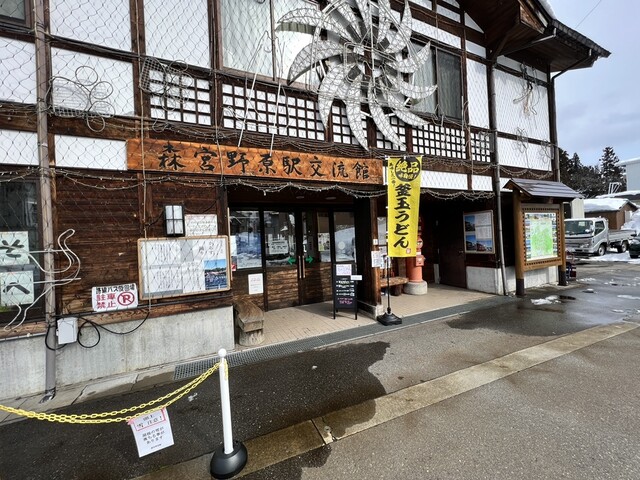
‘Morimiyanohara Eki’
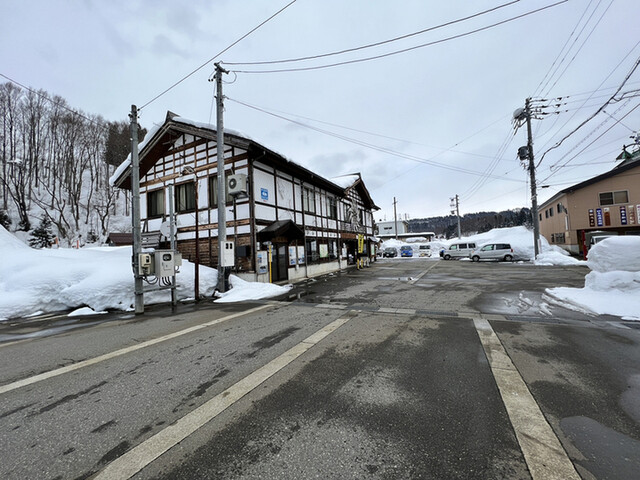
is the last station on the JR Iiyama Line in Nagano Prefecture. Calling it the ‘end of the road’ might be disrespectful to the residents living here. However, to someone like me, who has never experienced heavy snow, this northernmost part of Nagano was visibly different. The amount of snow alone is striking. While Nagano City has become considerably milder, here it was piled up as high as 2 meters. I saw several men climbing onto the building's roof to clear the snow. An elderly man passing by pointed out, ‘This is actually less snow than usual.’ He pointed to a sign that read, ‘Japan’s highest recorded snowfall, 7.85 meters, February 12, 1945’. Wow!
The purpose of my visit
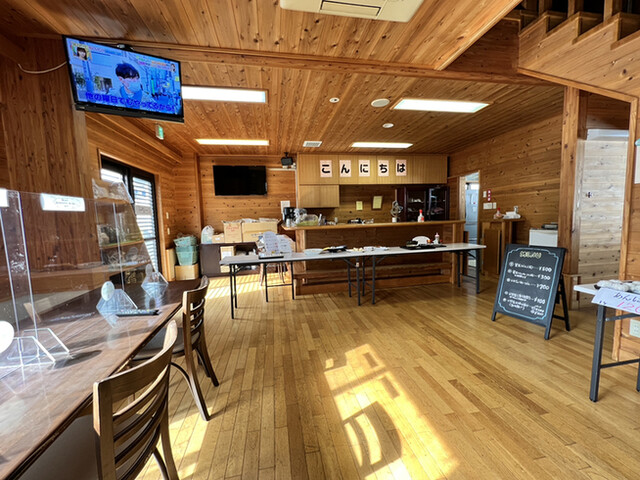
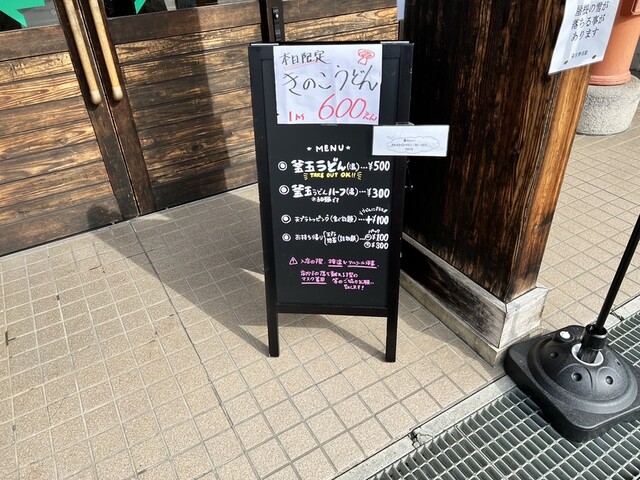
is a restaurant located within the Morimiyanohara Station (or rather, in the waiting room or the space being utilized). It is open three days a week: Monday, Thursday, and Friday. I assume it should be referred to as ‘Morimiyanohara Station’ since there’s no name listed. Peering at the menu outside, I saw:
Kamatama Udon (hot) JPY 500
Kamatama Udon Half (hot) JPY 300
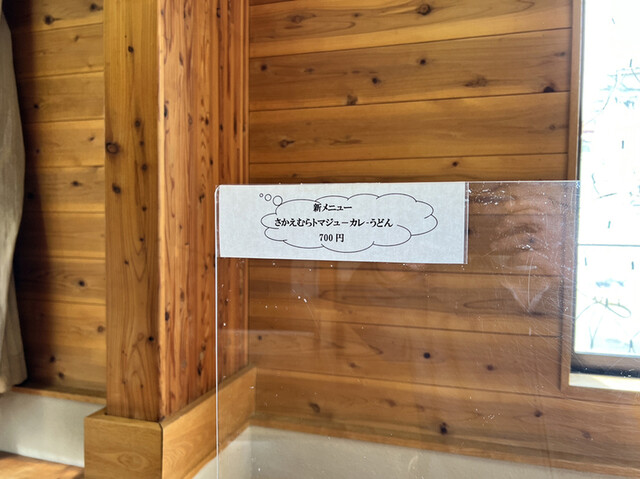
New Menu: Sakae Village Tomato Juice Curry Udon JPY 700
And today’s limited dish:
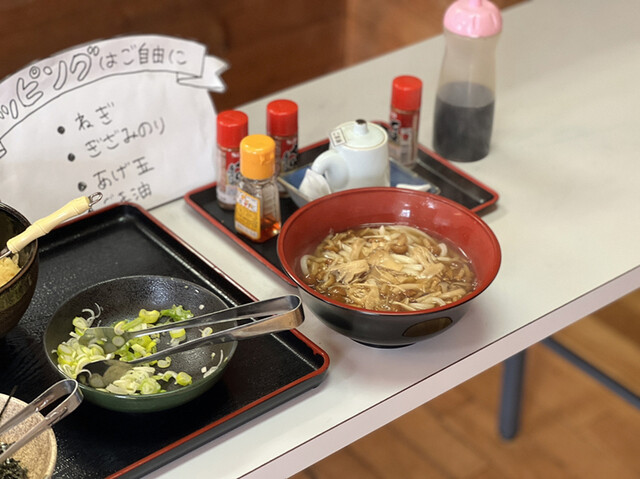
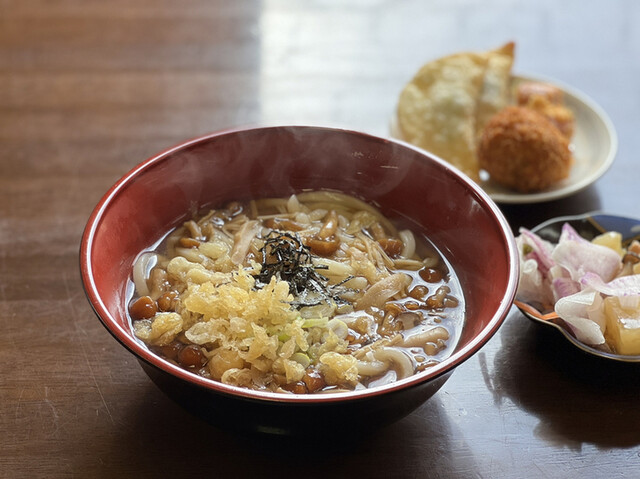
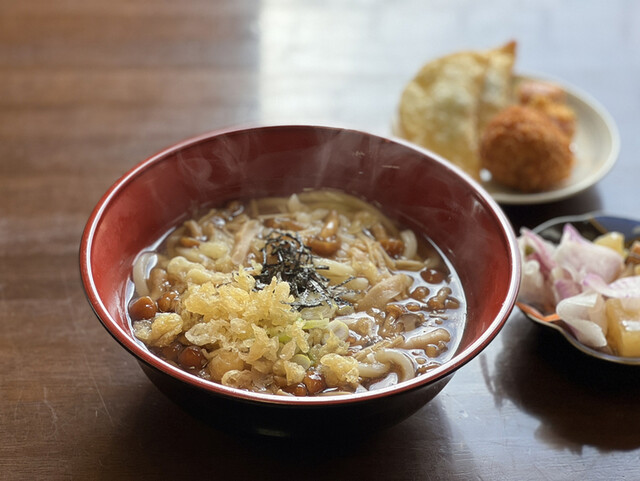
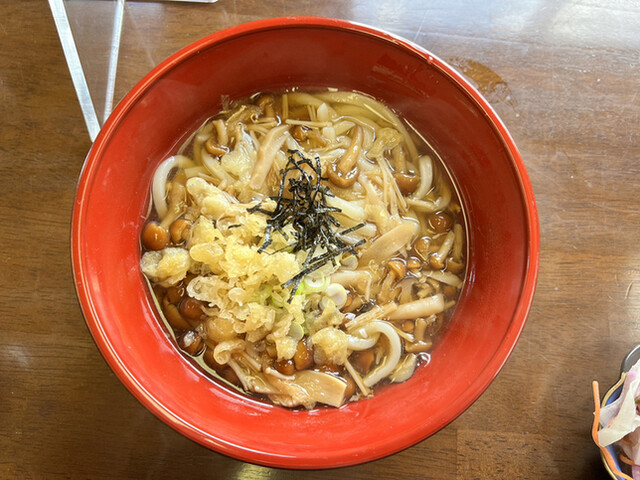
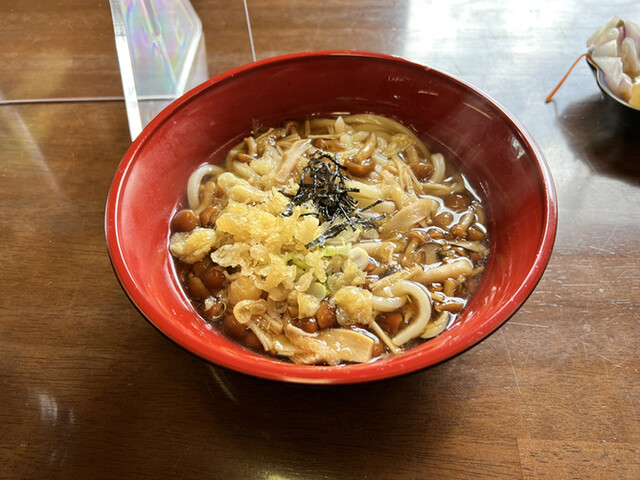
‘Mushroom Udon’ JPY 500
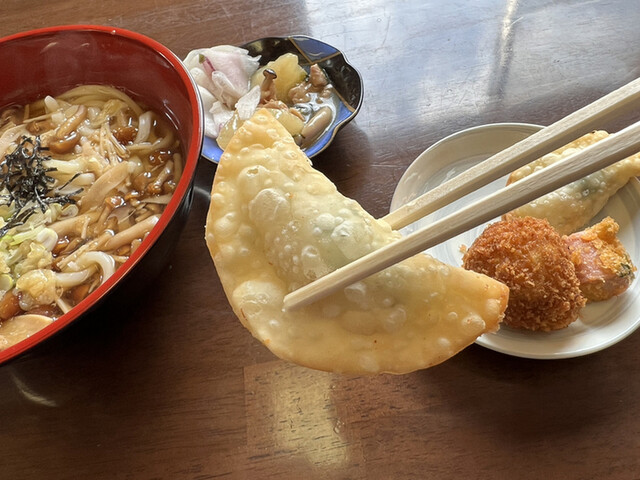
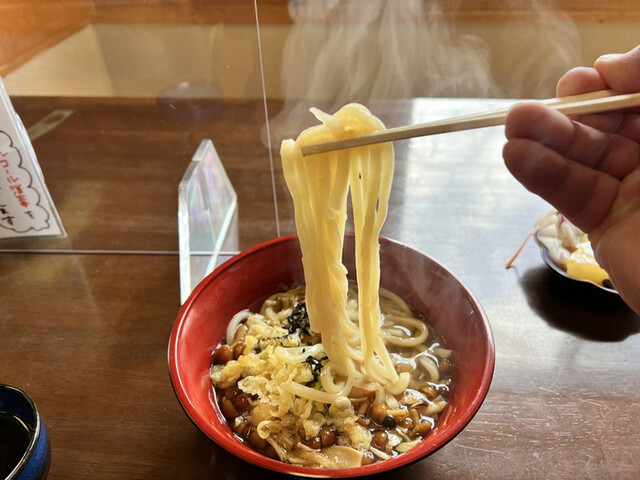
Anyone would be weak against the words ‘limited’ and ‘special’. As a representative of casual food trends, I simply had to order this dish. With the cheerful exclamation from the store lady, ‘Here you go! Enjoy!’, my bowl of udon arrived, served in a striking red and black plastic bowl. The udon, thick and brown, was filled with a heap of various mushrooms such as Nameko, Enoki, and Maitake, making it warm, delicious, and rich in flavor. But that’s not all I had to look forward to.
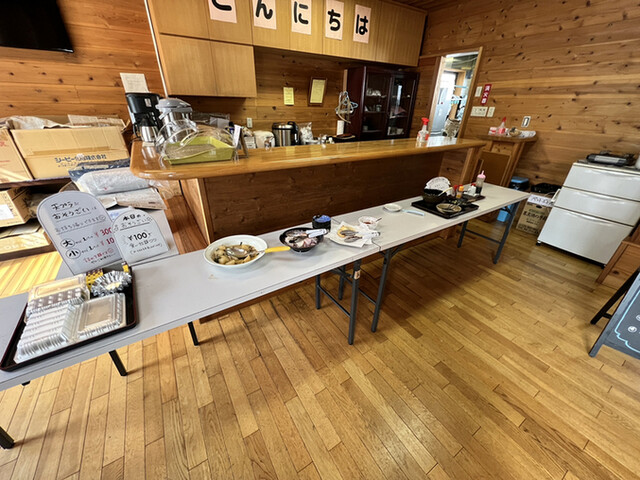
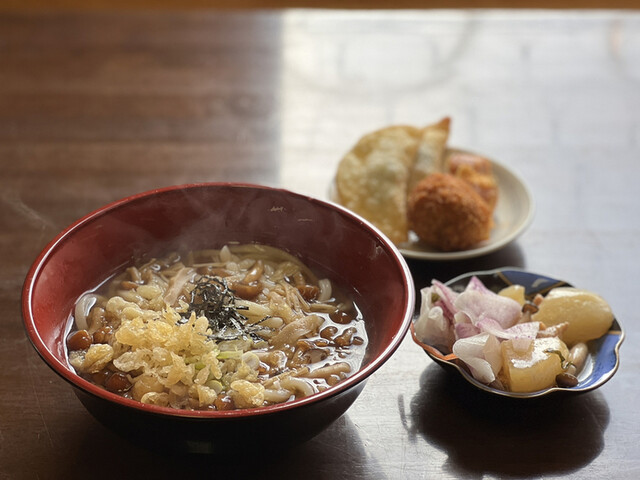
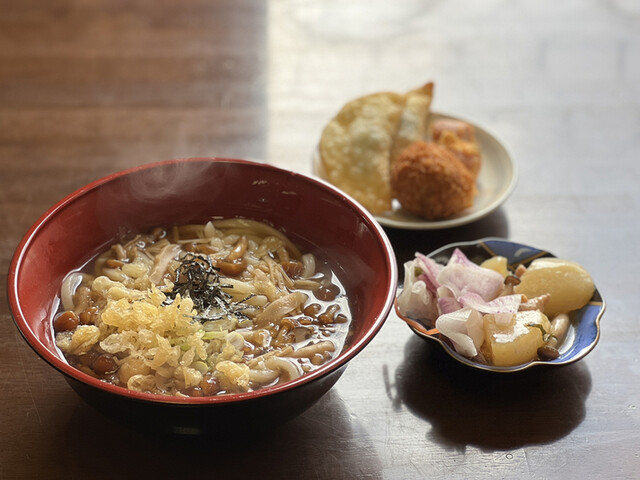
‘Today’s Side Dishes’ JPY 100
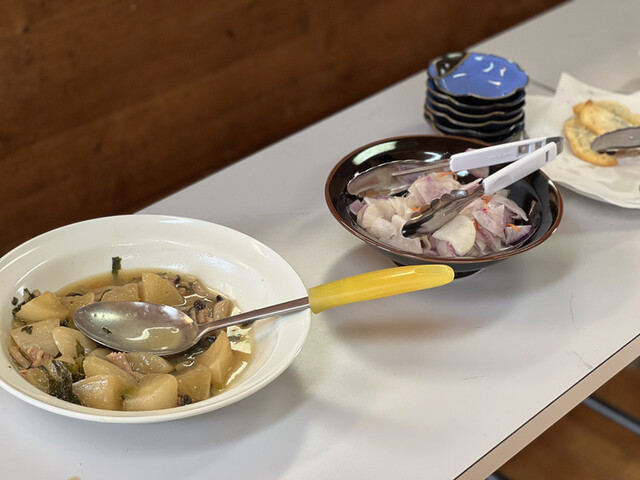
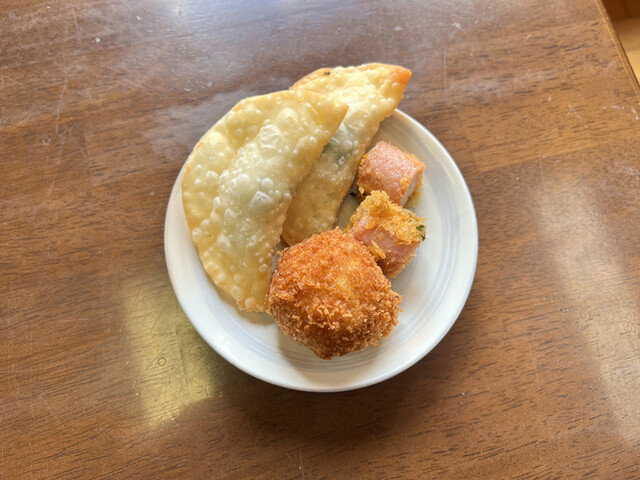
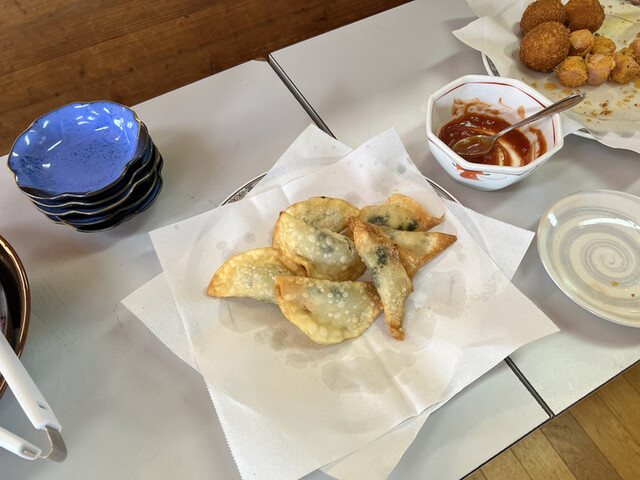
This buffet of side dishes is exclusive to those who ordered udon. Though it consists of three types of fried dishes and a stewed dish along with a small serving of pickles, it is incredibly delightful.
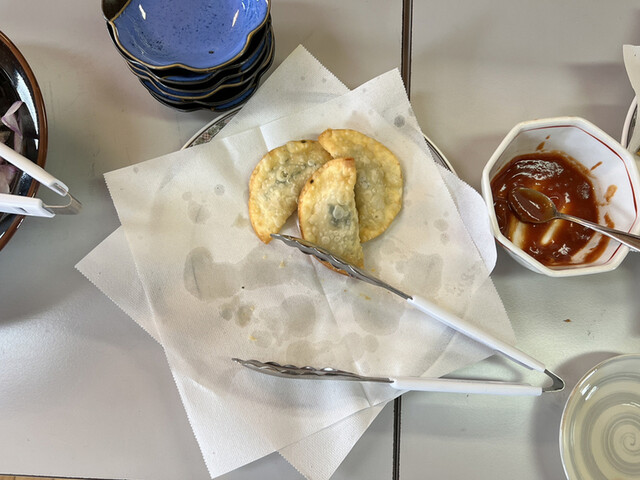
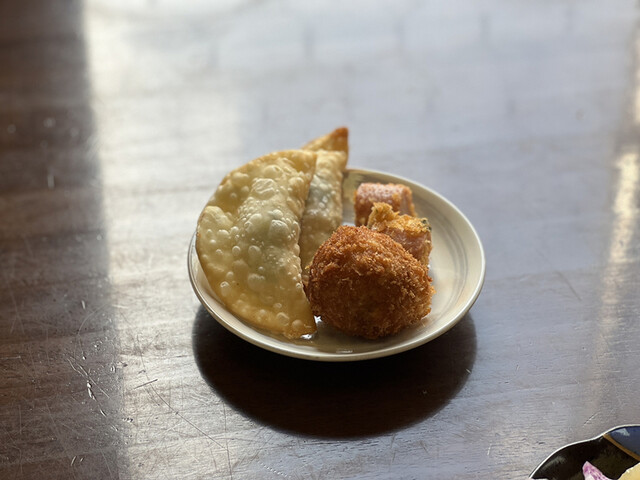
- Fried Gyoza
Filled with simple ingredients like chicken, cheese, and perilla leaves, they are deliciously cute. There’s nothing pretentious or showy about them, which makes them all the more endearing.
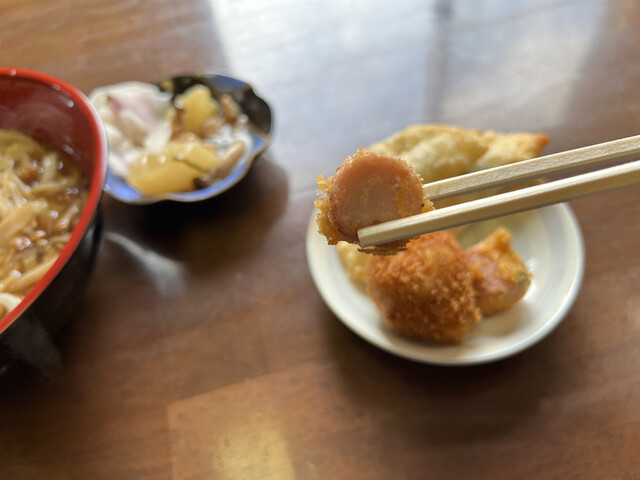
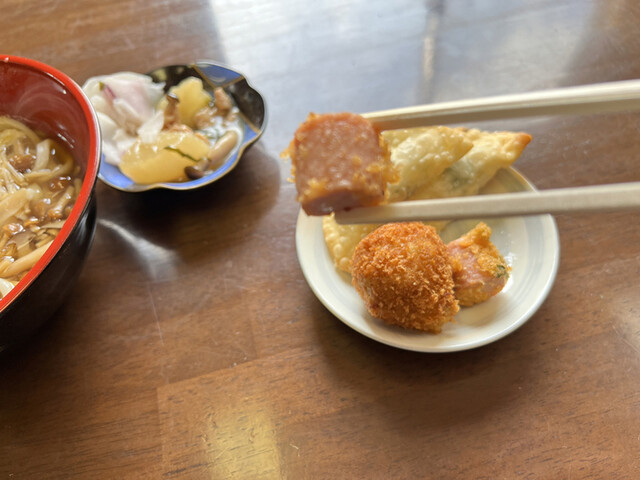
- Fried Sausage
Although they call it sausage, it’s not the high-end kinds like Alt-Bayer or Scharfe Wurst, but rather the good old-fashioned variety. These sausages are cut in half, coated in a light batter, and fried. The pleasant, bouncy texture is fantastic. I would have preferred if they were the red variety.
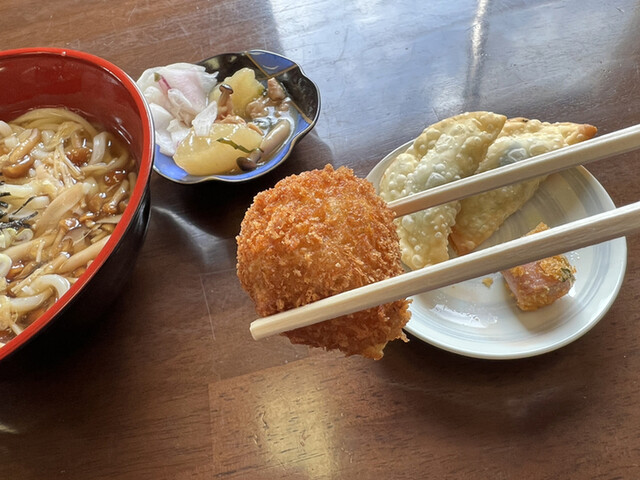
- Pumpkin Croquettes
Simply mashed boiled pumpkin shaped into rounds and deep-fried. This croquette has a wonderfully sweet and nostalgic flavor reminiscent of the Showa era. This one likely took the most effort to prepare.
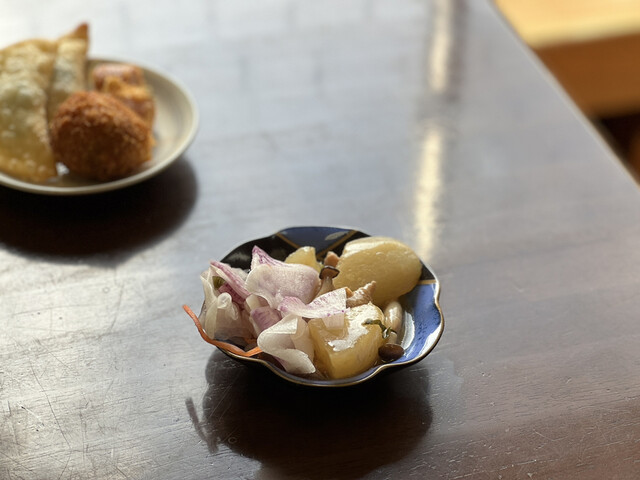
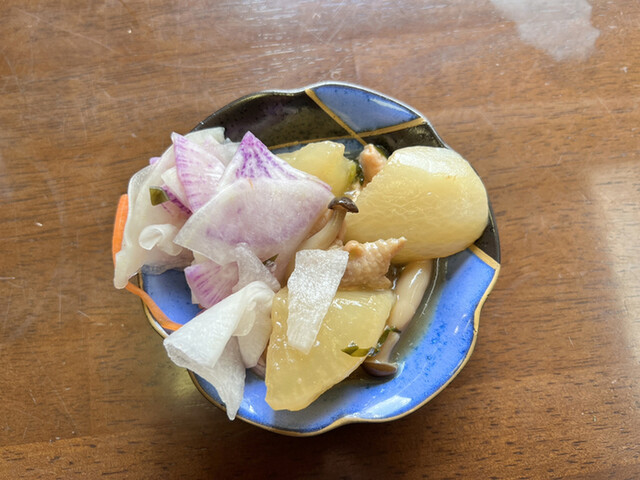
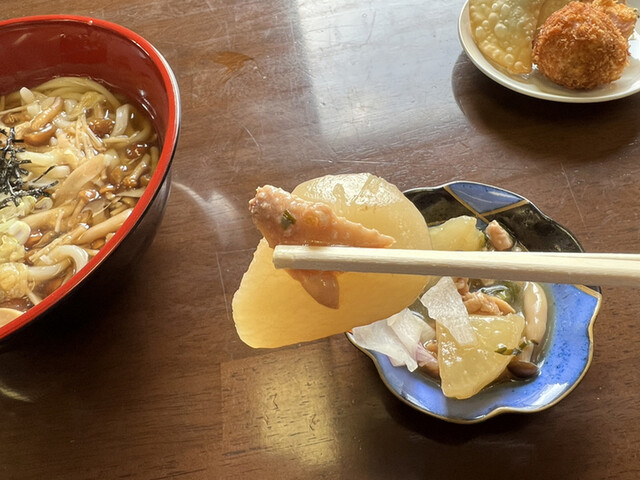
- Stewed Daikon Radish
Soft and flavorful, this dish features daikon cooked with chicken and its leaves. The flavor penetrates throughout, making it really delectable. The lady insisted that I should have more since it was the last batch, so I ended up having two servings.
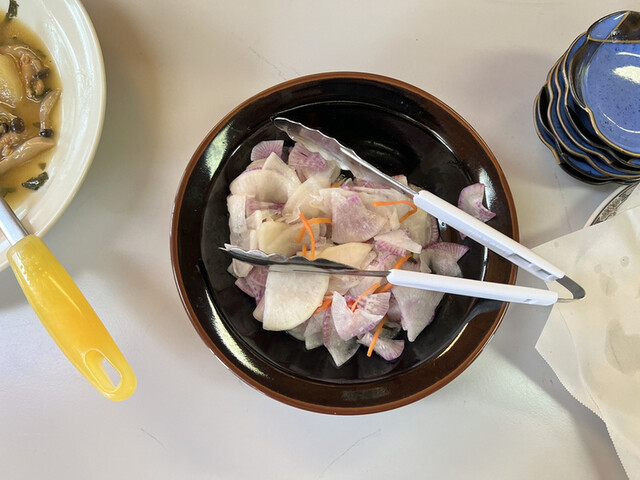
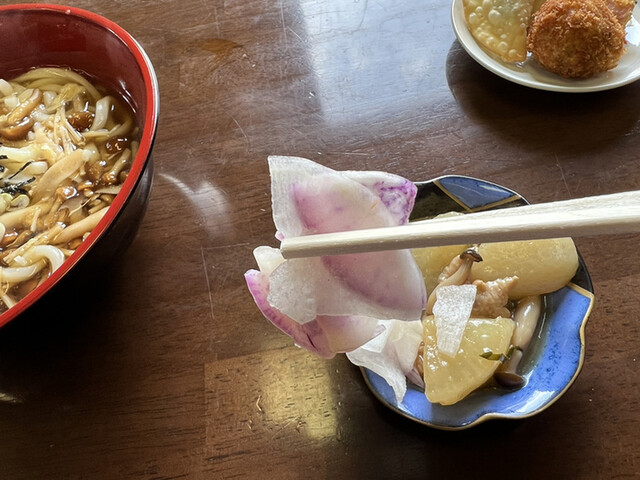
- Pickles
A quick pickling of regular daikon, purple daikon, and carrot in salt, seasoned to perfection. The crunchiness is at just the right level, which makes them extremely satisfying to eat.
Honestly speaking, I can only call this ‘countryside cooking’. It’s made from easily accessible ingredients—rather, those that are left over in a home refrigerator, hastily prepared. While that may trivialize it, this is exactly what I needed. This is what I longed for. As previously mentioned, the kind of food that a ‘grandma from the countryside’ would make is exactly this. I wanted this. Yes, this is what I wanted! Oh, it’s so delicious!
After the meal, I asked the store lady, and she told me they opened in July last year. I didn’t ask about the specifics, but I believe that local ladies started it out of a desire for ‘something’. When I mentioned I had come from Nagano City just to have lunch here, she was really pleased. She was quite surprised when I told her I learned about the place from social media. When I asked if I could upload my blog or YouTube video, she readily agreed, so I just uploaded it. Ladies, I’ll definitely find time to visit again!