Karuizawa Kuroiwa Muni
(軽井沢くろいわ 無二)

Restaurant information
Details
| Restaurant name |
Karuizawa Kuroiwa Muni
|
|---|---|
| Categories | Japanese Cuisine |
| Phone number (for reservation and inquiry) |
090-2598-9618 |
| Reservation availability |
Reservations available |
| Address |
長野県北佐久郡軽井沢町長倉3348-5 |
| Transportation |
798 meters from Naka Karuizawa. |
| Business hours |
Hours and closed days may change, so please check with the restaurant before visiting. |
| Average price |
JPY 20,000 - JPY 29,999 |
| Average price(Based on reviews) |
JPY 20,000 - JPY 29,999
|
| Payment methods |
Credit card accepted Electronic money not accepted |

Seats/facilities
| Private rooms |
Available For 4 people, For 6 people, For 8 people |
|---|---|
| Private use |
Available For up to 20 people |
| Non-smoking/smoking |
Non smoking |
| Parking |
Available |
Feature - Related information
| Occasion |
|
|---|---|
| The opening day |
2021.6.1 |
I wonder if it's an offshoot of the Ebisu branch. I visited this restaurant in Nakakaruizawa a couple of times some time ago, and during my stay in Karuizawa, I made a point to stop by again.
Their commitment to the final dish is remarkable, and I vividly remember enjoying a rice bowl topped with raw egg as a single dish, not just for breakfast.
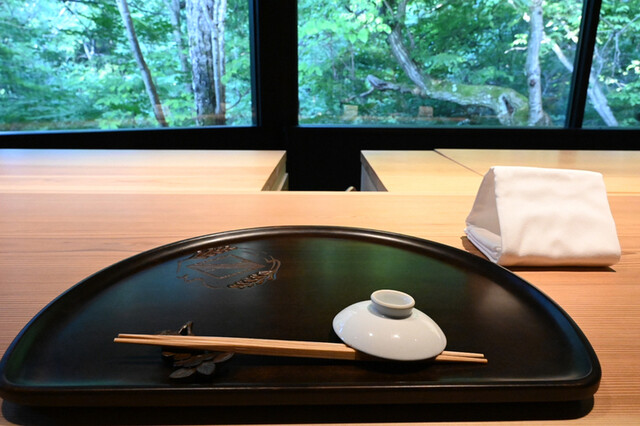
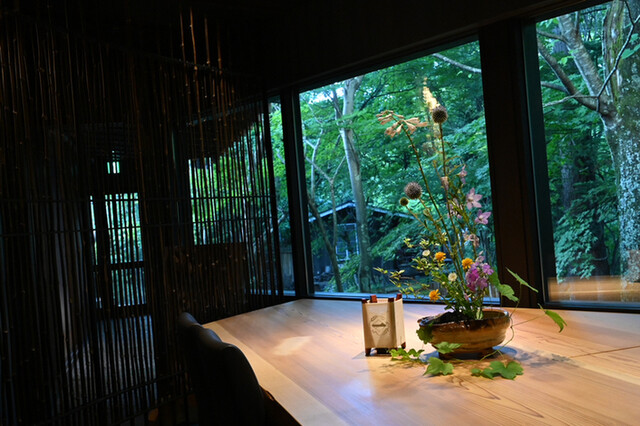
The restaurant is located along the main road after turning towards Kusatsu at the Nakakaruizawa intersection from Route 18. It seems to have been renovated from a locally established Japanese restaurant. Upon entering and walking down the corridor, I found a spacious counter bathed in light from large windows, with bright green views outside.
The Yukigawa River flows just behind the restaurant, merging into the Chikuma River from Mt. Asama. The beautiful counter, spacious seating, greenery outside, and the sound of flowing water create a wonderful ambiance.
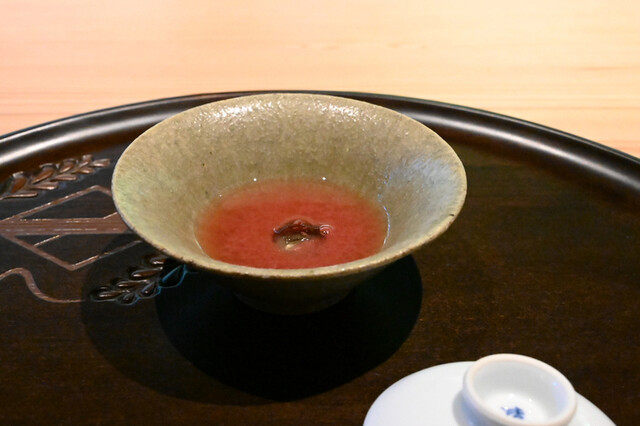
I had reserved a JPY 10,000 course, a kaiseki meal inspired by the local environment, featuring elements like 'mountain', 'river', 'lake', 'field', and 'one salt (dried delicacies)'. The chef collaborates with the kitchen in the back as he prepares and presents the dishes in front of us. The freshest experience of their transfer from Ebisu to Karuizawa is that they grow their own vegetables. Before, they just wrote down orders to receive delivered produce, but the affection felt when growing their own vegetables makes all the difference.
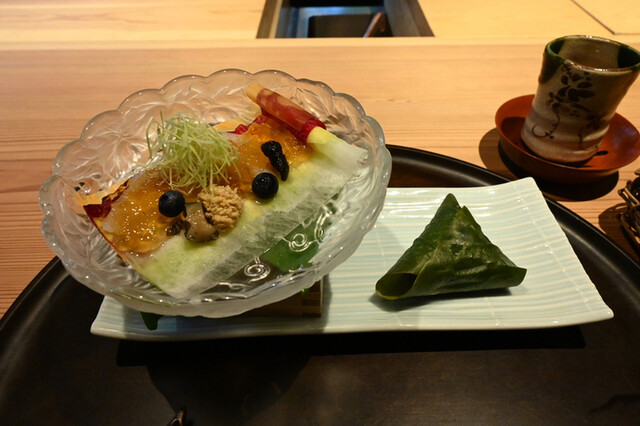
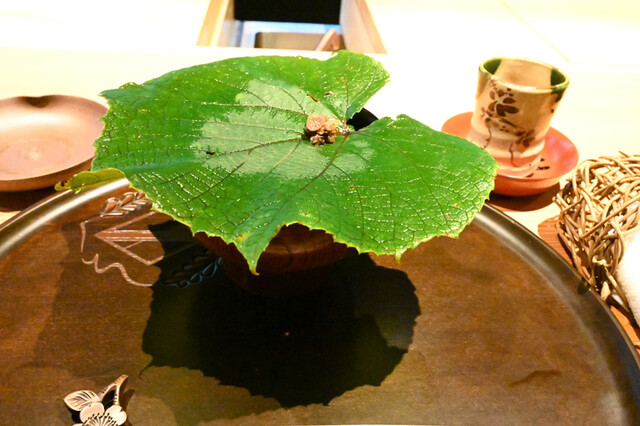
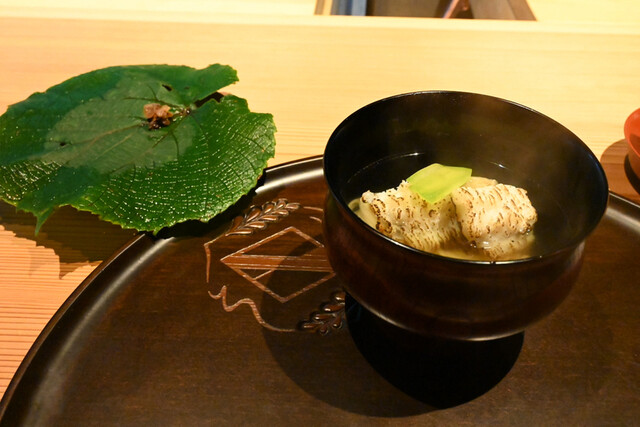
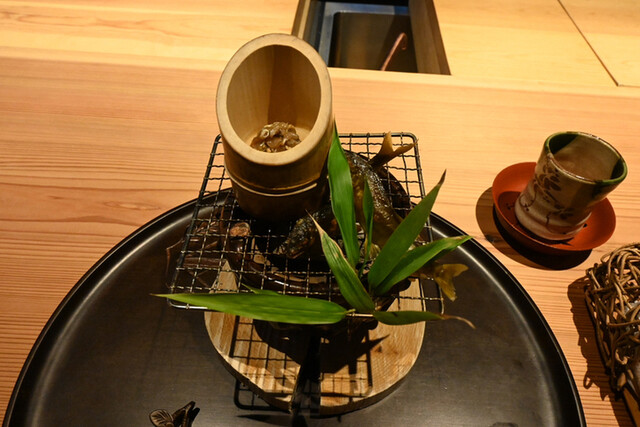
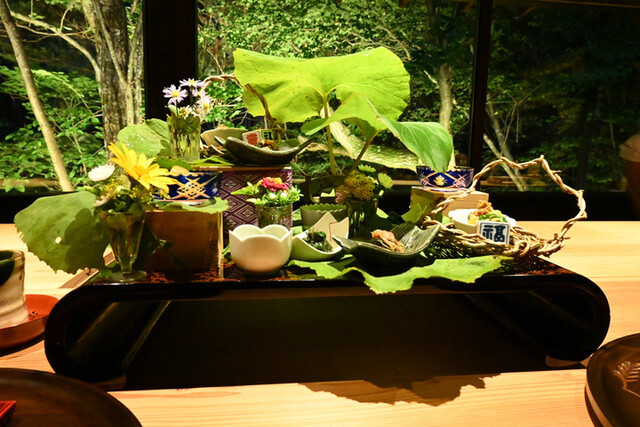
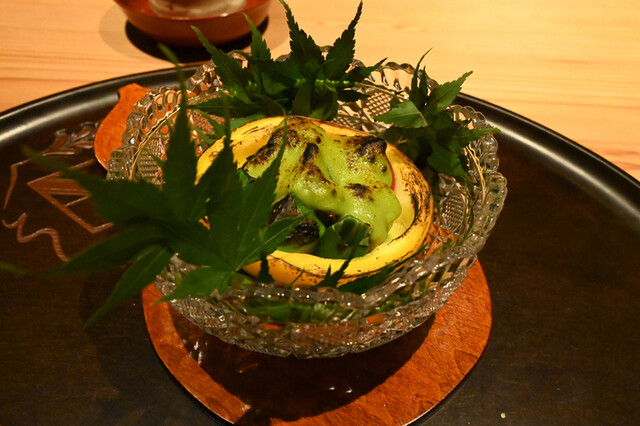
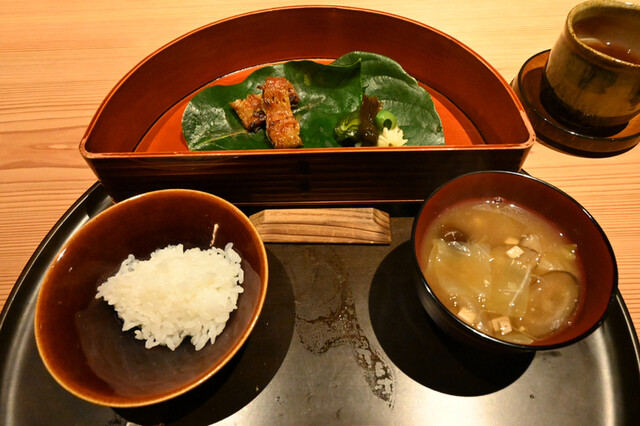
While I won’t go into each dish’s details, the presentation of the overall course is fantastic. For 'mountain', there is a variety of wild vegetables and nuts; for 'river', living sweetfish; for 'lake', soft-shelled turtle (raised in a hot spring); for 'one salt', a fish usually served with rice, akin to sake lees pickles; and summer delicacy, eel, which is essential in inland Kyoto cuisine. The dish includes a lid made from giant butterbur leaves, freshly prepared sweetfish served warm in bamboo tubes to transfer aroma, and a beautiful glass dish adorned with green maple leaves resembling a miniature garden.
There’s an impressive performance as well, where they skewer the sweetfish and fillet the eel right before our eyes, expertly cutting with a knife that supposedly yields 25 cuts per inch, making a satisfying sound with each cut. The 'mini garden' plating is a sight to behold.
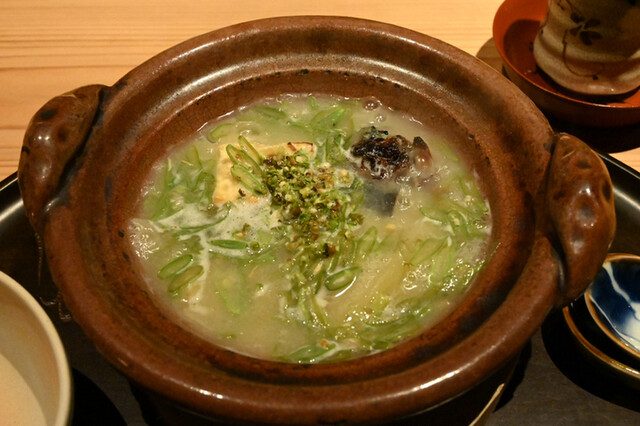
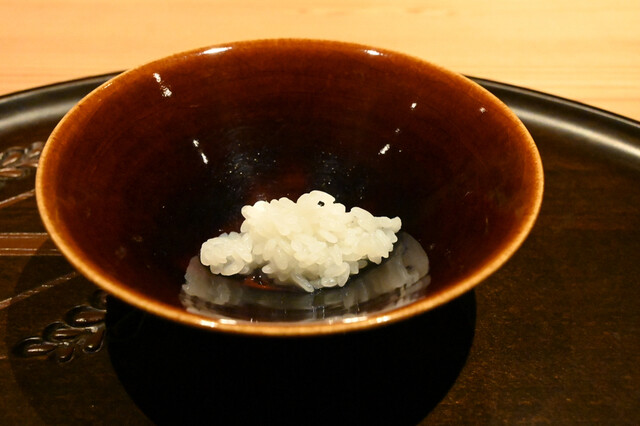
As a climax dish, we had soft-shelled turtle hot pot followed by rice cooked in a high-conductivity cast-iron pot, the same as their main store in Ebisu (cooking in half the time of clay pots). They even let us taste the rice slightly before it finished steaming.
A small serving of fish and hearty vegetable soup accompanies it. The rice is served in small bowls, allowing for refills. My first refill was shirasu rice, and the second was egg-topped rice.
For those with lighter appetites wishing for the egg-topped rice, it's best to express that desire. This egg-topped rice is something special, and the way they whisk the eggs seems different—fluffy and tender, seasoned with dashi so the flavor isn’t sharp like soy sauce.
I heard someone at the next table asking where the delicious eggs were from and was surprised to hear they came from Tsuruya, a well-known supermarket in the Jo-Shin region.
In any case, this rice bowl is extremely gentle and delightful.
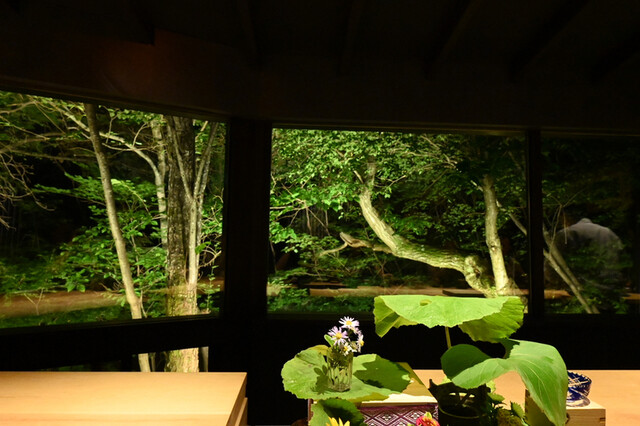
When I looked outside again, the scenery was illuminated, taking on a whole new charm.
When I think of dining in Karuizawa, I usually picture Italian, French, soba, or Western-style breakfasts, as there are so many restaurants in this category. While there are a few spots for yakiniku and Chinese food, I had typically traveled all the way to Miyota for kaiseki cuisine. This restaurant truly embodies the essence of Karuizawa.
I believe the young owner’s ingenuity in his first year of business contributes to this. What we seek in Karuizawa is reflected in our love for fresh vegetables in French cuisine and fresh vegetables and cheese in Italian cuisine—elements that, when present in a dish, satisfy what we associate with 'Karuizawa'. The presentation of kaiseki here goes beyond just the ingredients.
Communications across the counter, the counter height adjusted so that the cooking process is visible, allowing for a clear view of the chef’s hands—all these factors enhance the overall experience. The artistry of the plating, especially with the bamboo fragrance rather than just being warmed over a chafing dish like typical banquet or ryokan fare, stirs both the senses of smell and taste.
All these aspects, combined with selected ingredients and the chef’s skill, heighten the consciousness of Karuizawa even further.
I feel the high level of dining in Karuizawa restaurants. It’s incredibly fulfilling for us to explore and choose our meals. While Tokyo also has seasons, I found myself wanting to experience the seasons of Karuizawa at this restaurant.