Azumaya Kyu Karuizawa Ten
(あづまや)- Nearest station:
- Categories:
-
- Budget:
-







Restaurant information
Details
| Restaurant name |
Azumaya Kyu Karuizawa Ten
|
|---|---|
| Categories | Cafe featuring Japanese sweets, Japanese traditional sweets, Soba (Buckwheat noodles) |
|
0267-42-1701 |
|
| Reservation availability |
Reservations unavailable |
| Address |
長野県北佐久郡軽井沢町旧軽井沢674 |
| Transportation |
2,028 meters from Karuizawa. |
| Business hours |
Hours and closed days may change, so please check with the restaurant before visiting. |
| Average price(Based on reviews) |
JPY 1,000 - JPY 1,999
|
| Payment methods |
Credit cards not accepted Electronic money not accepted QR code payments not accepted |

Seats/facilities
| Number of seats |
38 seats |
|---|---|
| Private rooms |
Unavailable |
| Private use |
Available |
| Non-smoking/smoking |
Smoking allowed The revised Health Promotion Act for passive smoking prevention has been in effect since April 1, 2020. Please check with the restaurant for the most up-to-date information. |
| Parking |
Unavailable |
Feature - Related information
| Occasion |
This occasion is recommended by many people. |
|---|---|
| Location |
A house restaurant |
| Service |
Take-out |
| Dress code |
do not have |
| Website |
Find Similar Restaurants (Occasion)
Find Similar Restaurants (Area)
Karuizawa Sta.
- Karuizawa Sta.
- Karuizawa Sta. × Cafe featuring Japanese sweets
- Karuizawa Sta. × Japanese traditional sweets
- Karuizawa Sta. × Soba (Buckwheat noodles)
Karuizawa
- Karuizawa
- Karuizawa × Cafe featuring Japanese sweets
- Karuizawa × Japanese traditional sweets
- Karuizawa × Soba (Buckwheat noodles)
Karuizawa, Saku
- Karuizawa, Saku
- Karuizawa, Saku × Cafe featuring Japanese sweets
- Karuizawa, Saku × Japanese traditional sweets
- Karuizawa, Saku × Soba (Buckwheat noodles)
Nagano
- Nagano
- Nagano × Cafe featuring Japanese sweets
- Nagano × Japanese traditional sweets
- Nagano × Soba (Buckwheat noodles)
Karuisawa Town, Kitasaku District
- Karuisawa Town, Kitasaku District
- Karuisawa Town, Kitasaku District × Cafe featuring Japanese sweets
- Karuisawa Town, Kitasaku District × Japanese traditional sweets
- Karuisawa Town, Kitasaku District × Soba (Buckwheat noodles)
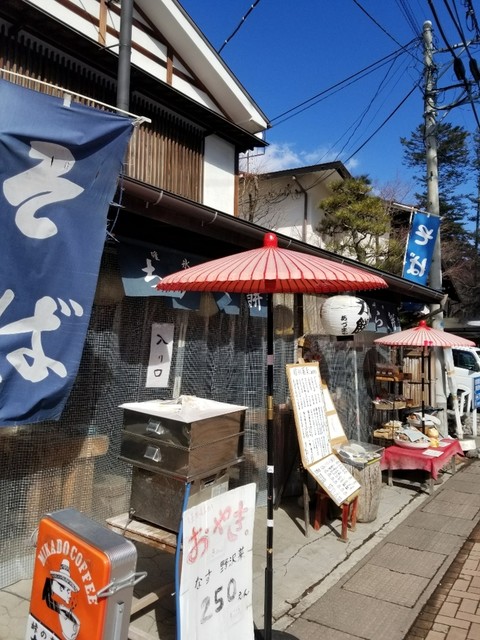
At the end of Old Karuizawa Street, there is a traditional tea shop that has been in business since the Edo period. Their signature product is "Usui Pass Power Mochi," a local specialty of Karuizawa, made using traditional methods with freshly pounded rice cakes made every morning and adzuki beans from Hokkaido.
In winter, Karuizawa sees very few tourists besides skiers, and nearly half of the shops close for winter break from March to April. The sparse visitors are mostly Chinese tourists.
I looked it up on Tabelog, and as expected, popular places like Kawakamin and Suju Masayuki topped the list. Among their reviews, I found a particularly enticing picture of the mochi.
There was only one review. Whether it was dango or mochi, it looked delicious, and the appearance had a nice character to it. Plus, they even had the soba I wanted to try. Despite it being noon on a Sunday, there were no lines at either Kawakamin or Suju, but after seeing that mouthwatering picture, I felt compelled to go.
I parked my car in a lot for JPY 250 a day and walked 10 minutes. As is often the case, the actual appearance of the shop was quite different from the exterior image. I hesitated slightly before entering, but decided to make the effort.
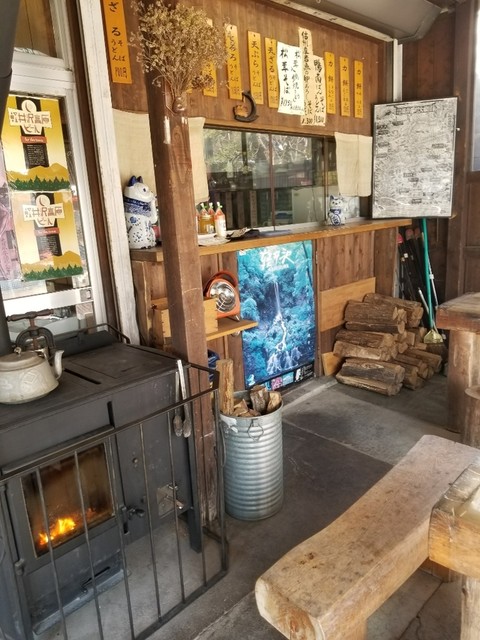
The morning temperature was a chilly -7 degrees. Upon entering, I found a warm fireplace, semi-outdoor tables, and a narrow interior at the back.
Surprisingly, during the prime lunch hour, there were no customers. I quickly checked the reviews.
Poor reviews… I felt the dread wash over me. The service, in particular, received harsh criticism, making the tension palpable.
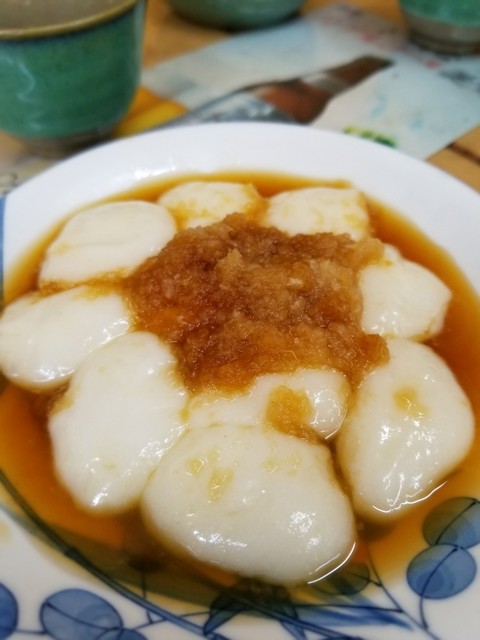
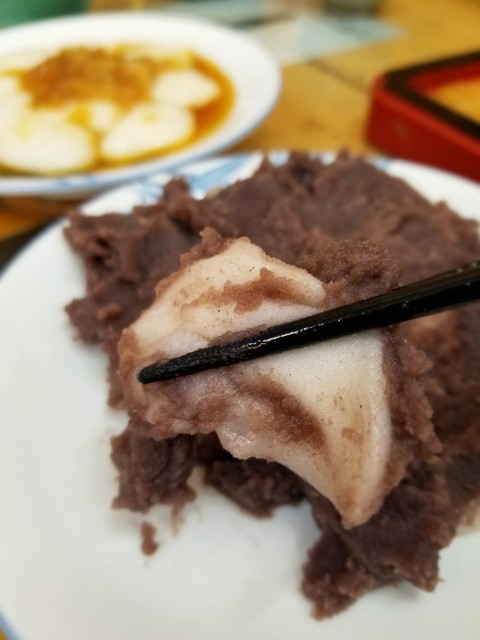
The power mochi comes in various flavors: ama (sweet red bean paste), kara (grated daikon), egoma (perilla seeds), kinako (roasted soybean flour), goma (black sesame), and walnut, each priced at JPY 520. After some deliberation, based on the review image, I decided to order the particularly tempting ama (sweet red bean paste) for JPY 520 and the kara (grated daikon), along with a giant shrimp tempura soba for JPY 2,100 and a regular zaru soba for JPY 900.
Indeed, the atmosphere felt quite unfriendly. The casual exchanges between the chef and the waitress were overly familiar. Even if I didn’t want to listen, it piqued my curiosity. After leaving, I found that my opinions matched with my wife’s, so I was sure of it.
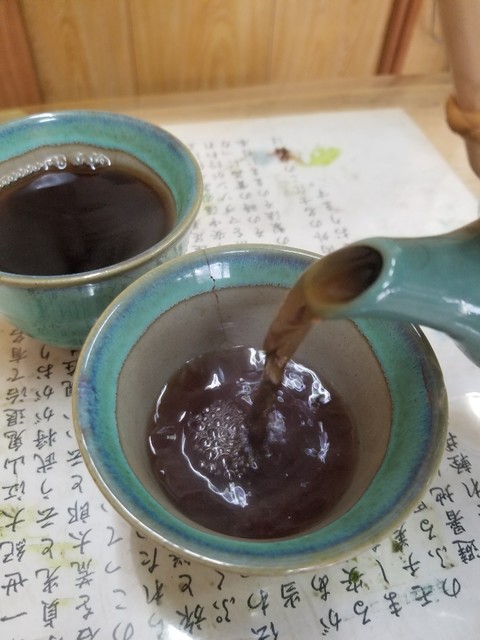
Now, tea was served first. It had a surprisingly dark and astringent appearance. When I took a sip, it turned out to be regular hojicha, which was comforting.
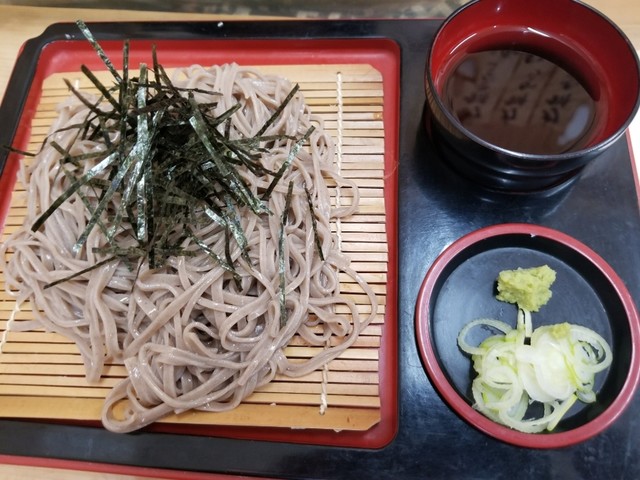
Soon after, the zaru soba and the giant shrimp tempura zaru soba arrived. The shrimp was indeed large. I took a bite of the soba. Hmm, it was firm and quite delicious. Although the portion was small, I personally liked it.
Before finishing, the power mochi appeared. There were about 10 pieces of mochi, around twice the size of shiratama. The quantity was quite substantial, so I was glad I hadn’t ordered a large serving of soba.
First, I tried the kara (grated daikon). The mochi, contrary to my expectation of being warm, was cold. Oh, I see. Also, while I anticipated some spiciness from the daikon, it was even stronger than I imagined. Hmm, no matter how many I ate, it was spicy. Then I tried the ama (sweet red bean paste). It wasn’t overly sweet and balanced well with the kara.
It felt somewhat like Akafuku, with less sweetness and a softer texture. Both were delicious, but they were a bit heavy to have two plates after sharing the soba.
Later, a customer who entered after us ordered only the power mochi without soba, asking for "two of the kara."
What?! I inwardly thought they should definitely choose different flavors. I also felt the staff could have offered some advice.
Furthermore, while I could have asked for sobayu (soba water), there was an unspoken air that discouraged me from doing so. Many people probably choose firm zaru soba over warm soba, and during the deep snowy winters of Karuizawa, a little consideration would have been appreciated.
On the table, it read, "If you use the table, please 'definitely' order one item per person," but the moment I sat down, I could see through the shop's atmosphere and how they treated their customers.
The taste was delicious across the board, so I believe this place could become great if they improved their service.